When global media covers climate activism, the cameras usually point north — to school strikes in Stockholm, blockades in Berlin, marches in New York. But some of the most consequential climate organizing of this generation is happening across Africa, led by young people who face higher stakes, higher risks, and far less coverage.
That imbalance matters. Africa contributes a small fraction of historical global emissions, yet its communities absorb some of the harshest climate impacts: failed harvests, devastating floods, disappearing shorelines. The people organizing in response deserve to be heard — not as victims, but as leaders.
Here’s what youth climate activism in Africa actually looks like, why it’s harder than most people realize, and how to support it.
A movement built from lived experience
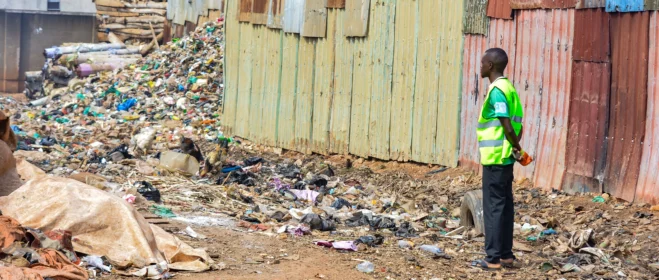
For many African activists, climate change was never an abstraction learned from a documentary. It arrived as a failed harvest, a flooded neighborhood, a lake choking on plastic.
That’s how it began for Hilda Flavia Nakabuye, who traces her activism to watching climate impacts devastate her family’s farm in Uganda. In 2019 she founded Fridays for Future Uganda, which has grown into East Africa’s largest youth-led climate movement — organizing weekly strikes, school outreach programs, and regular clean-ups of Lake Victoria, the freshwater lifeline for tens of millions of people.
She’s far from alone. Across the continent, youth-led movements are demanding climate justice: activists campaigning against new fossil fuel infrastructure in East Africa, organizers fighting for a just energy transition in South Africa’s coal belt, and community groups across West Africa confronting coastal erosion and oil pollution.
The risks are real — and unequally distributed
Striking from school in Northern Europe takes conviction. Doing it in contexts where protest rights are fragile takes something more.
African climate activists routinely face risks their Northern counterparts rarely encounter: arrest and detention for peaceful protest, intimidation and surveillance, online harassment, and the quieter costs — strained family relationships, interrupted education, and financial hardship in economies where activism doesn’t pay rent.
Nakabuye herself has been arrested multiple times in the course of her activism, and has carried her message from Kampala’s streets to demonstrations in France, Germany, and the United States — a journey she describes in depth on the JET Voices podcast.
There’s a bitter irony here: the people least responsible for the climate crisis face the greatest danger for demanding its solution. That is precisely what climate justice means — recognizing that responsibility, impact, and risk are not distributed fairly, and acting accordingly.
Erasure is its own injustice
Beyond physical risks, African activists fight a subtler battle: being cropped out of the story.
The pattern repeats: African delegates given token minutes at global summits; activists literally cropped from press photos of international climate events; funding that flows to Northern NGOs while grassroots African organizers run movements on volunteer time.
Representation isn’t a courtesy — it’s a correction. Communities on the frontlines hold exactly the knowledge global climate policy lacks: what adaptation actually requires, which solutions fit local realities, and what a just transition looks like from below. When Nakabuye speaks at forums like COP or the UN General Assembly, she’s not adding diversity to the conversation. She’s adding accuracy.
What keeps them going
Ask frontline organizers why they persist despite the risks, and the answers rarely mention optimism. They mention necessity. Home isn’t something you can stop defending.
That resolve is reshaping the global movement. African youth activists have forced fossil fuel finance onto summit agendas, built pan-African organizing networks, and made “climate justice” — not just “climate action” — the frame the world increasingly uses.
How you can support youth climate activism in Africa
- Listen first. Follow African activists and movements directly — including Fridays for Future Uganda — rather than only Northern accounts of their work.
- Share their stories. Visibility is protection. Activists facing intimidation are safer when the world is watching.
- Fund grassroots, not just headquarters. Support organizations that move resources directly to frontline organizers.
- Demand representation. Push institutions, media, and events in your own country to platform Global South voices — as speakers, not props.
- Stay for the long haul. Movements survive on sustained attention, not viral moments.
Hear the story firsthand
Statistics describe the crisis; stories make it real. On JET Voices, Hilda Flavia Nakabuye tells hers — the arrests, the high-stakes decisions, the strategy behind grassroots organizing, and what it takes to keep marching when the costs get personal.
🎧 Listen to “The Risks Climate Activists Face” with Hilda Flavia Nakabuye →
JET Voices amplifies Global South voices in the just energy transition. Subscribe to our newsletter or explore more episodes.
Further reading
COP25 coverage featuring Hilda Nakabuye — Vox
Hilda Flavia Nakabuye — Wikipedia